A merry go round that carries large family groups needs more than extra seats; it needs a platform that lets those groups board without tripping over each other. Platform size is the hidden constraint in many carousel projects. This guide explains when a larger platform is justified for merry go round platform size planning.
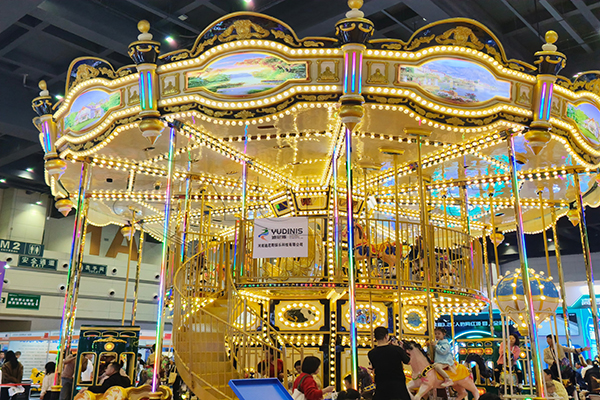
Measure the Platform Per Passenger
Compare the platform area with the number of riders it serves. A compact platform can hold many seats but leave too little standing room for parents helping children or for attendants checking restraints. Calculate the area per passenger, then compare it with the operator’s own experience of similar rides. A larger platform usually pays for itself through faster boarding, not through extra seats alone.
Plan for Pushchairs and Family Bags
Family groups arrive with pushchairs, bags and sometimes grandparents who need to sit down. The platform and its approach should include space to park a pushchair outside the queue, a bench for waiting and a clear route to the boarding edge. A large platform carousel for families works best when those needs are designed in rather than added later as clutter.
Check the Stairs and the Upper Deck
If the carousel is a two-level model, the stairs become the bottleneck. A wider stair, a landing and clearly marked entry points let families climb without blocking the lower deck. Confirm the platform depth at the top, because a narrow upper level can only carry the same number of riders as a much smaller single-level ride.
Keep the Queue Outside the Platform
A larger platform should not absorb the queue. Waiting guests need their own area, separated from the boarding edge, so that the platform stays clear for unloading, restraint checks and maintenance. Marking the queue and the platform with different surfaces helps guests understand where to stand and reduces the work of the attendants.
Check the Footprint and the Structure
A larger platform increases the structural span and the foundation loads, so the footprint and the civil works should be reviewed together. Reviewing a double decker carousel for large families shows how a larger model arranges its platform and stairs. The structural background is summarised in reference material on carousel platform and seating.
Model the Loading Cycle
Finally, test the platform size by simulating a full load. Count the time needed for a family group to board, secure a child, check the restraint and clear the platform, then compare it with the cycle time. Repeat the simulation at the busiest hour, when several families arrive together, because that is when a platform that looks adequate on paper begins to feel crowded. A platform that is large enough to reduce congestion usually improves throughput even if the ride itself is unchanged.
A carousel needs a larger platform when family groups cannot board without congestion. Measure the area per passenger, allow for pushchairs and waiting, check the stairs, separate the queue, review the footprint and simulate the load cycle. Operators can review the range from Carousel Manufacturer carousel sizing team and open the product page at https://www.carouselmanufacturer.com/product/amusement-park-merry-go-round/.