Begin With Scope, Occupancy, and Local Authority
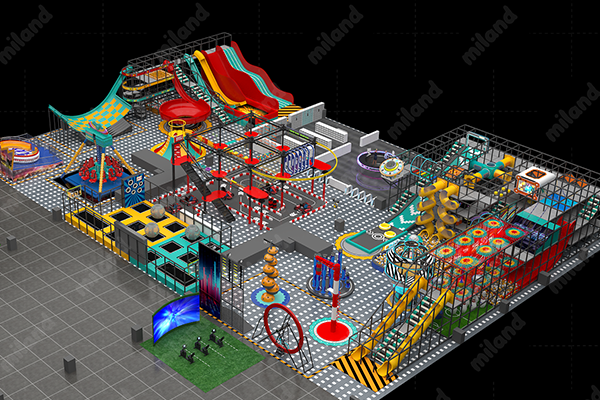
Indoor adventure park projects combine climbing towers, slides, ropes, soft play, and sometimes trampoline courts in one building. That mix makes standards a procurement and engineering issue rather than a paperwork exercise at the end of the project. A indoor adventure park safety standards guide should begin with the age ranges, equipment types, maximum occupancy, fall heights, and local authority having jurisdiction. ASTM and EN are useful reference families, but the project specification, national building rules, fire strategy, insurance conditions, and authority approvals determine what the finished venue must demonstrate. Write those requirements into one controlled matrix before comparing equipment quotations, because two suppliers can quote similar layouts while carrying very different evidence for structural design, impact testing, edges, gaps, and entrapment risks.
Build the ASTM Compliance Matrix
The ASTM framework gives operators and designers a common language for public-use play equipment. ASTM F1487 covers the performance and safety requirements for public playground equipment, while the related access and use guidance helps teams think about routes, clearances, and supervision. ASTM F2373 addresses play equipment for children from six months through twenty-three months, and ASTM F1292 provides a method for evaluating impact attenuation of playground surfacing. The standards must be used in the edition adopted by the project, not copied from an old tender document. A ASTM and EN playground compliance package should list each applicable equipment family, the standard clause, the required test report, and who signs the conformance statement. This matrix lets a buyer compare technical submissions without assuming that a CE mark, a supplier certificate, or a generic safety statement proves every relevant requirement.
Use EN 1176 and EN 1177 as a Design System
European projects commonly start with the EN 1176 series for playground equipment and EN 1177 for impact-attenuating surfacing. The parts of EN 1176 address different equipment families, so the applicable parts must follow the actual attraction list rather than the product brochure’s headline. EN 1177 testing is especially important where fall heights change across a single structure. Indoor venues also need to coordinate those requirements with fire, egress, electrical, ventilation, and accessibility rules that sit outside the playground standards. Pairing the structure with multi-level indoor adventure play equipment can improve circulation, but it creates more interfaces between platforms, slides, nets, columns, and floors. Require a drawing that shows those interfaces and rejects any design in which an equipment certificate describes a different configuration from the one being installed.
Screen Climbing, Ropes, and Trampoline Structures
Challenge attractions often need standards beyond the main playground specification. Ropes courses, climbing walls, trampoline courts, ninja lanes, and zip lines have their own performance, operation, inspection, and maintenance references. Ask the supplier to identify the exact standards used for each structure instead of using ASTM or EN as a generic quality claim. The review should cover structural calculations, anchor loads, harness interfaces, fall restraint, landing zones, access control, and rescue procedures. Materials also matter: fixings, mesh, padding, and surface systems must remain suitable for the intended cleaning regime and indoor environment. A component that passes a laboratory test can still create a hazard when installation tolerances, maintenance access, or supervision sightlines are poorly resolved. Inspect the interfaces, not only the catalogued parts.
Translate Standards Into Drawings and Operations
Standards become useful when they appear in drawings, schedules, and daily operating documents. The drawing set should reference each enclosure, opening, moving part, slide exit, fall zone, and structural connection. The quality plan should name the witness points for materials, welds, coatings, surfacing, and final assembly. An experienced Miland indoor playground manufacturer should provide a clear compliance package, as-built layout, spare-parts list, maintenance manual, and staff inspection forms. Train operators to record damaged parts, loose fixings, worn surfaces, and obstruction of exits, then define who can clear each issue before the area reopens. Keep the approved design revision visible during installation so site changes do not silently move a platform, shorten a fall zone, or block an inspection route.
Procure Documents and Verify Compliance Before Opening
Procurement should require traceable evidence rather than a one-page assurance letter. Request the standard edition, the tested configuration, test reports where applicable, material declarations, structural calculations, installation instructions, and the manufacturer’s limitation of use. Compare those documents with the actual building and the authority’s conditions. ASTM International is a useful starting point for understanding how consensus standards are developed, but the current standard text and local adoption decide the contractual requirement. Before opening, complete a documented pre-use inspection and retain the evidence with the venue’s safety file. The final acceptance should reconcile the ASTM and EN matrix, the as-built drawings, and the operating plan. Categories: Indoor Playground, Adventure Park, Playground Safety, Commercial Playground Equipment, Family Entertainment Center, Standards And Compliance. Tags: ASTM standards, EN 1176, indoor adventure park, playground safety, impact attenuation, commercial playground equipment. https://www.milandplay.com/faq-items/which-safety-standards-apply-to-commercial-indoor-playgrounds-and-fec-projects/