A wild mouse coaster can be installed in a plot that would never hold a large circuit, but the same tight geometry that makes it possible also makes routine service difficult. Technicians need to reach the chain lift, the brakes and every track joint without closing half the park. This guide explains how to plan wild mouse roller coaster maintenance access before the foundations are poured.
Map the Service Route Before the Track
Start with a plan showing how a technician walks from the workshop to every part of the ride, carrying tools and a replacement part. On a compact coaster the track frequently passes close to fences, buildings and other attractions, so the shortest route is not always usable. Mark the service route on the same drawing as the track and the queue, then adjust the layout until no maintenance point is blocked by a guest area.
Provide Standing Room at the Critical Components
The chain lift, the drive, the brake fins and the station controls need space to work on, not just space to see. Confirm that a person can stand safely beside each component with a toolbox and a light, and that the area is protected from the ride’s moving parts. If the plot is too narrow for a permanent walkway, design removable panels or a service platform that can be installed during a shutdown.
Plan Lifting and Delivery in Advance
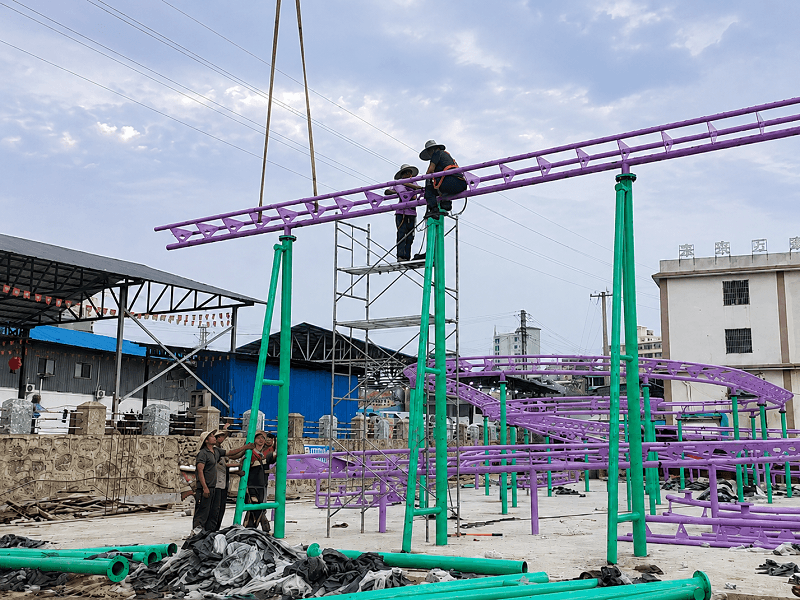
Track sections arrive on a truck and have to be lifted into position, which is often harder on a narrow site than the ride itself. Check the crane position, the lifting radius, the ground bearing pressure and the time of day when the delivery can take place without disturbing guests. On an operating park, a delivery plan that closes a walkway for two hours is far easier to approve than one that closes it for two days.
Design Shutdowns Around the Service Plan
A compact coaster usually has a short annual inspection window, so the maintenance plan should list the tasks that require the ride to be stopped, the tasks that can be done while it runs and the parts that must be on site before the shutdown begins. Good servicing a wild mouse coaster in a tight plot planning turns a week of uncertainty into a scheduled programme, and it protects the park’s opening hours during peak season.
Compare Layout Options for Serviceability
Two track layouts can fit the same plot and behave very differently in maintenance. A layout that folds the track away from the boundary leaves room for ladders and inspection, while one that hugs the fence saves a few metres and costs hours every year. Reviewing 4 loop roller coaster ride arrangements alongside the wild mouse drawing shows how different coaster families allocate service space, which helps the park judge what it is trading away for a compact footprint.
Keep Records and Spares Close to the Ride
Finally, decide where the spares, lubricants and inspection records will live. A small store beside the station saves a walk to the main workshop on every shift, and a simple log of adjustments reveals wear before it becomes a breakdown. The thinking behind scheduled inspection is set out in reference material on planned maintenance schedules, and applying it to a compact coaster is mostly a matter of making the work physically possible.
Maintenance access is a design decision, not an afterthought. Map the service route, provide standing room at the critical parts, plan lifting and delivery, schedule shutdowns around the task list, compare layouts for serviceability and keep spares and records close by. Operators developing a compact coaster can review the range with ThemeParkProjects ride service team and start from the product page at https://themeparkprojects.com/wild-mouse-roller-coaster/.