A free fall tower is one of the most effective thrill rides a park can buy: highly visible, quick to operate, and capable of serving large numbers of guests. It is also a significant investment that depends on site conditions, power supply, and operating assumptions. This guide lists what operators should evaluate when choosing a free fall tower for their park.
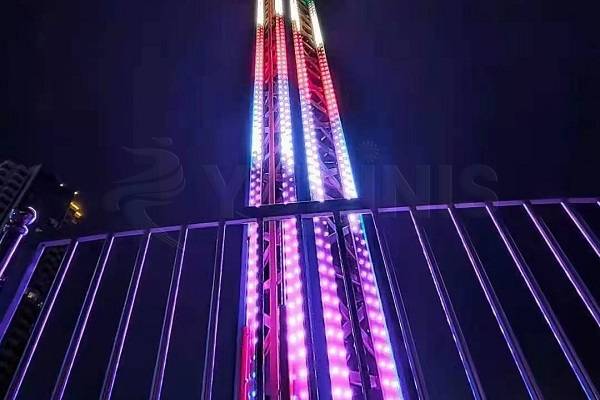
Height, Drop Type, and Thrill Level
Height determines the marketing value of the ride, but the type of drop determines the sensation. A pure free fall gives an immediate, intense release with strong braking at the base, while combination towers add rotation, tilt, or a bounce sequence that extends the experience. Match the choice to your audience: parks with few thrill rides usually benefit from an intense classic tower, while established thrill zones may prefer a combination ride that differentiates the offer.
Capacity and Cycle Time
Check seats per cycle and cycle time together, because hourly throughput is what drives revenue. A 24-seat tower with a two-minute cycle serves around 700 guests per hour; a three-minute cycle reduces that figure to about 480. Ask for measured data and compare several models using the same assumptions, since the free fall tower selection process should be based on hourly capacity rather than seat count alone.
Site, Foundations, and Wind Loading
Towers are tall structures that transfer significant loads to their foundation and are exposed to wind. Confirm soil conditions, foundation design, anchor layout, and the manufacturer’s maximum operating wind speed. The site also needs a defined safety zone, queue area, and maintenance access, all of which should appear on the layout drawing before civil works begin.
Power Supply and Control Systems
Review the electrical demand of the lift system, the control cabinet location, and the earthing and protection requirements. Where the park expects to add lighting effects, confirm that the supply has capacity for them, and plan the cable routes so they do not cross guest areas. Reliable braking and redundant safety systems are non-negotiable, and their design should be explained in the technical documentation.
Operating Costs and Maintenance
Energy consumption per cycle, brake wear, and inspection requirements make up the recurring cost. Towers with high capacity and short cycles spread those costs across more riders, improving the return on investment. Plan an annual inspection budget, keep key spares such as brake components and sensors, and train staff to complete daily checks before opening.
Ride Mix and Complementary Attractions
Consider how the tower fits your existing lineup. Some parks pair a drop tower with a gentler alternative such as a pendulum ride for parks so that two high-capacity attractions share the same zone and keep crowds moving between them. A balanced mix also gives families a choice while teenagers queue for the tower.
Choosing a free fall tower comes down to height, drop type, capacity, site conditions, power, and lifetime cost. Work with an experienced Top Ride Sale amusement ride factory that supplies foundation drawings and operating data, and review the general design of a free fall tower before finalising your specification. To compare models and request a proposal, visit https://www.topridesale.com/drop-tower-ride-for-sale/.