Ten thousand square metres is the threshold where a water park becomes a regional destination. At this size the park can carry a wave pool, several slide towers, a dedicated children’s area, a lazy river and full food and beverage – and it also has to support the staffing, water treatment and maintenance systems of a serious attraction. The budget conversation therefore changes: it is no longer about whether the park can be built, but about which configuration delivers the best return.
A realistic water park construction cost at 10,000 m² usually falls between USD 3 million and 7 million for a turnkey scheme on prepared land. The cost to build a 10,000 sqm water park is driven less by the number of slides than by three decisions: the water treatment capacity, the balance of fixed versus themed structures, and how much of the park is built in the first phase. For the full picture across park sizes, see how much does it cost to build a water park.
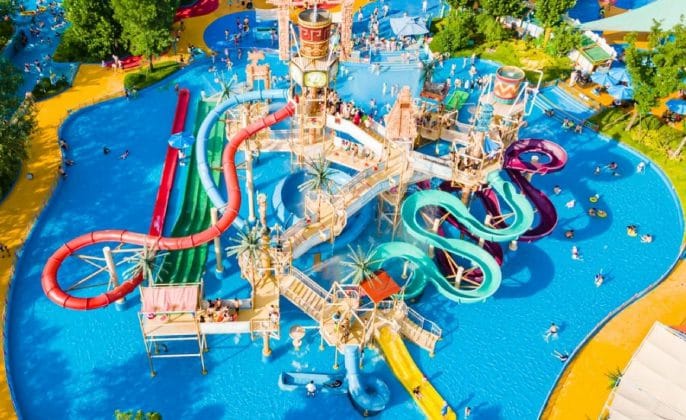
How a 10,000 m² Budget Splits
| Cost block | Share of budget | What it covers |
|---|---|---|
| Attractions and slide towers | 35 – 45% | Wave pool, racer and raft slides, splash structure, kids zone |
| Pools and civil works | 15 – 22% | Pool shells, waterproofing, decks, drainage, retaining walls |
| Water treatment and plant room | 12 – 18% | Filtration, disinfection, balance tanks, pumps, pipework |
| Buildings and guest facilities | 12 – 18% | Entrance, changing rooms, lockers, F&B, cabanas, shade |
| Installation, freight and commissioning | 8 – 14% | Shipping, duties, local labour, testing and training |
At this scale the plant room is no longer a supporting element; it is a major engineered facility. A wave pool alone may require a complete water turnover every two to four hours depending on local health codes, which sets pump size, pipe diameter and the footprint of the filtration building. Sizing it for the finished park at the outset is considerably cheaper than a phased upgrade.
Three Decisions That Move the Number Most
1. Attraction mix
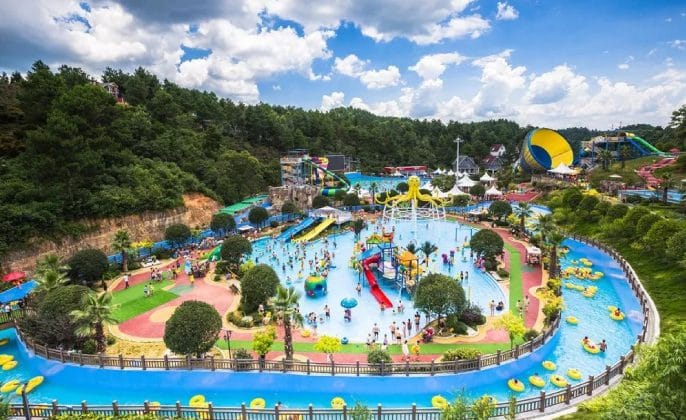
A wave pool is the strongest attendance driver available at this size and also the most capital-intensive single element. Racer slides deliver high throughput per square metre, raft slides carry groups and command a premium ticket, and a splash structure keeps younger families on site for hours at low operating cost. Slide shells and play structures are typically produced in FRP, where resin grade and gelcoat thickness determine both price and service life under strong sun and continuous chlorination.
2. Theming and finish
Theming is the most controllable line in the budget. Rockwork, imported feature structures and bespoke joinery can add a third to the entrance plaza; local stone, planting, shade sails and colour-matched paving deliver most of the guest experience for a fraction of the cost and age better in heat.
3. Phasing
At 10,000 m² phasing is a financing strategy, not a compromise. Opening with the splash zone, leisure pool and two slide towers – roughly half the eventual attraction spend – starts revenue a season earlier and funds the wave pool from proven cash flow rather than additional debt.
Space planning deserves the same discipline. Allowing roughly 60 percent of the site for circulation, queuing, planting and service access leaves about 40 percent for water bodies, and that ratio is what keeps a busy park comfortable on a full summer day.
Operating Costs That Catch New Owners Out
- Lifeguards. Every supervised water body needs certified staff on each shift; the roster scales with the number of pools, not the number of guests.
- Energy. Filtration and heating run daily whether or not the park is busy. Off-season running costs surprise new operators more often than construction costs do.
- Chemicals. Budget per litre of water treated, not per ticket sold.
- Planned maintenance. Set aside three to five percent of the attraction package each season for pumps, seals, slide surfaces and controls.
Revenue and Payback
A well-run 10,000 m² park in a warm climate typically targets payback in four to six operating seasons. The revenue mix decides whether that happens: day tickets bring visitors, season passes fill weekdays when fixed costs are already paid, and cabanas, food and beverage lift average spend without adding a single square metre of water. Model the site pessimistically – a park designed for 2,000 guests a day should still cover its costs at 700.
Frequently Asked Questions
How many slide towers does a 10,000 m² park need?
Three to five towers is typical, each carrying two to four slide experiences. Variety of ride type matters more than raw slide count, and a mix of body, raft and racer slides spreads demand across the day.
Is a lazy river worth including?
Yes at this scale. It adds dwell time, appeals to guests who do not want thrill rides, and can be integrated with landscaping to create a quieter zone away from the wave pool.
How long does construction take?
Design and permitting usually take three to five months, production of slides and filtration equipment four to eight months, and site installation four to six months depending on weather and scope.
Planning a 10,000 m² Water Park?
Send us the site plan, the target opening date and the guest mix you expect, and we will return a block-by-block estimate based on complete water park solutions from Dinis. As a water park equipment manufacturer working directly with owners, we quote attractions and the plant room together so the budget survives construction. To see how these cost blocks translate into a real scheme, read more here.